





Navigating Malaysia's fiscal priorities
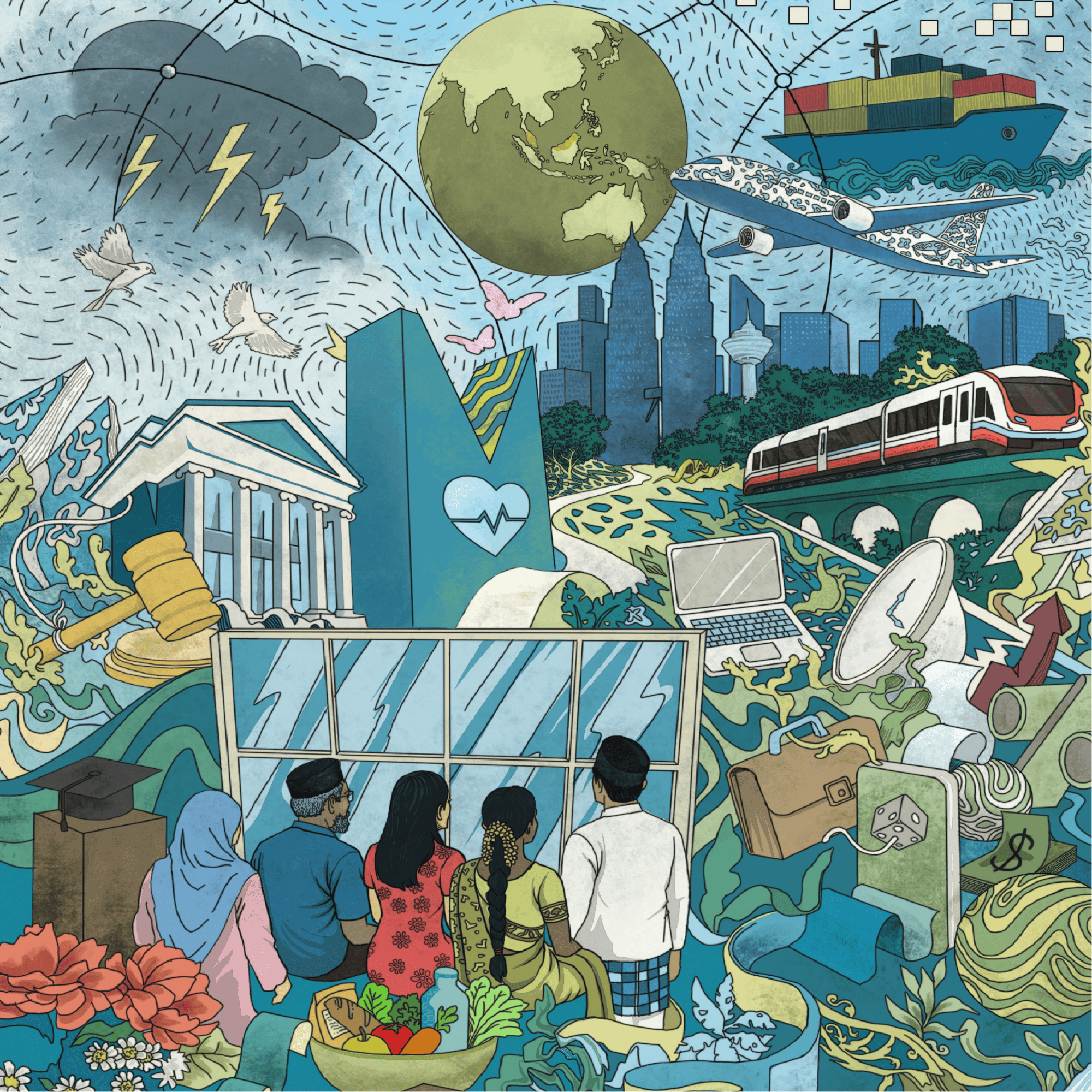
We began 2026 amid geopolitical tensions, technological shifts and changing patterns of global trade. The Israel-US war on Iran and the resulting disruptions to crude oil and natural gas markets are ongoing. These supply shocks have affected not only energy markets, and consequently almost all economic activities, but also downstream products ranging from fertilisers to plastics. Inflationary pressures have affected both households and firms, placing further strain on fiscal resources and influencing the direction of monetary policy responses worldwide. This is a global crisis on both economic and political fronts.
For Malaysia, the challenge is not simply to sustain economic growth, but to build resilience amid global uncertainties and geopolitical tensions while ensuring that the benefits of growth are broadly shared. The Government faces the arduous task of managing its fiscal resources to ensure sufficient fiscal space to incentivise growth while mitigating the negative effects of the ongoing crisis. This brings policy trade-offs into sharper focus, as scarce fiscal resources must be used to sustain economic growth while ensuring that its benefits are equitably distributed and felt by both households and firms. Budget 2027, recently tabled in Parliament, contains key elements of how fiscal policy is being deployed during these trying times. The Government did not introduce new revenue measures, but instead tabled a slightly expansionary expenditure plan targeting a broad spectrum of intended beneficiaries while maintaining the trend of a declining fiscal deficit.
The stark choices facing the Government in crafting the budget, its key fiscal policy tool, concern whether to use the revenue lever through taxation or the use of its assets, or to rely on the expenditure side of the budget. The latter is further divided into operating and development expenditures. Operating expenditure comprises the costs of running the Government, including the services it provides and what it spends directly to benefit Malaysians, such as subsidies and cash transfers. Development expenditure, on the other hand, covers what the Government builds to support the services it provides: the provision of public goods ranging from schools and universities to healthcare, national security and public safety. These are what national accounts classify as public investments. Since operating expenditures are, by law, constrained by revenues, and this constraint is binding, decisions on development expenditures are tantamount to deficit decisions. These, too, are constrained by legislation, namely the Fiscal Responsibility Act (FRA) 2023. These constraints, which are key elements of the fiscal reforms put in place since 2023, sharpen the debate on available policy options.
Looking beyond household income
Khazanah Research Institute recently released the sixth edition of its flagship State of Households 2026 (SOH 2026) report, its biennial collaboration with the Department of Statistics Malaysia (DOSM), using data from the Household Income and Expenditure Survey (HIES). This year's SOH theme, From Income to Wellbeing, brings the debate on policy trade-offs to the fore. This year's SOH poses a broader question: what else, beyond income, determines household wellbeing?
The concept of wellbeing itself is well recognised. The former Economic Planning Unit introduced the Malaysia Quality of Life Index in 1999, which has since evolved into the current Malaysian Wellbeing Index (MyWI). This year's SOH uses additional measures of wellbeing alongside the income and expenditure data contained in the HIES to address the question posed. As the HIES is conducted and reported at the district level, comparisons were made across all administrative districts in Malaysia in terms of income, consumption and broader wellbeing measures, including access to schooling, healthcare and local services such as waste management.
In fiscal terms, household wellbeing can still be defined through its consumption function, divided into the consumption of private goods paid for by income and the consumption of public goods provided by the Government and financed through fiscal revenues. SOH allows for an examination of the supply, and therefore the availability, of public goods at the district level. This brings the policy question of improving overall household wellbeing into sharper focus: how much fiscal resources should be allocated towards enhancing household income to increase private consumption, and how much should go towards increasing the supply and quality of public goods? Understanding these policy trade-offs will help inform decisions on resource allocation.
Understanding the urban-rural divide
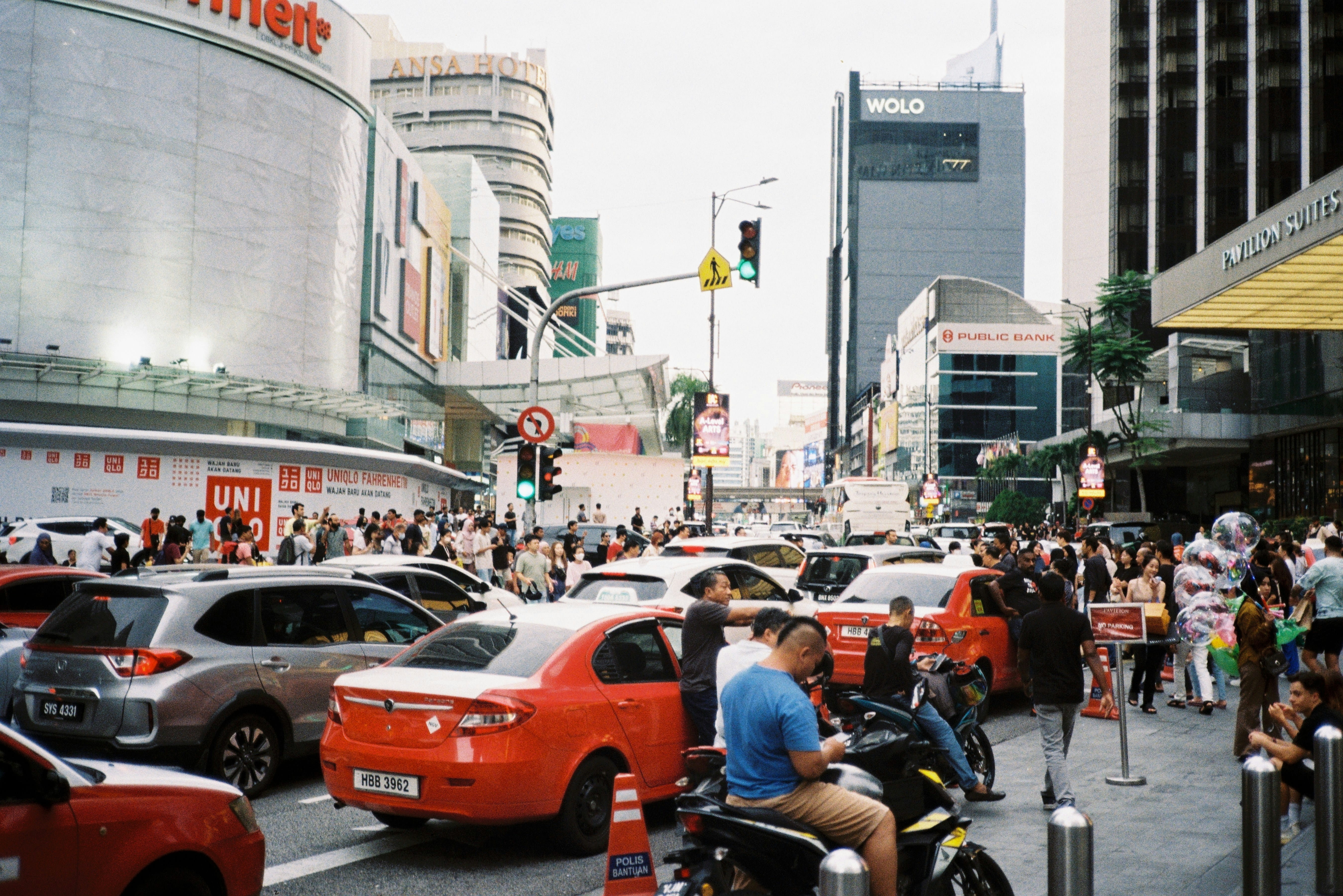
A key characteristic of the Malaysian economy, as well as its demographics, is crucial to understanding the data observed in both the HIES and SOH 2026. Malaysia is undergoing rapid urbanisation, with its population concentrated in a few major conurbations, namely Greater Kuala Lumpur, Penang, Johor Bahru, Ipoh, Kota Kinabalu and Kuching. The Federal Territories, Selangor, Pulau Pinang and Melaka are almost entirely urbanised. Peninsular Malaysia is almost 85% urbanised, while both Sabah and Sarawak are just below 60%. Just 10 of the country's most populous districts account for nearly 40% of the Malaysian population.
This population concentration, as well as its spatial distribution, reflects the distribution of economic activities and opportunities. Economic growth and its accompanying agglomeration effects are spatially concentrated, representing a natural economic equilibrium that becomes a feature of one aspect of inequality. The notion of an urban-rural divide in assessing household wellbeing must also be put into perspective. As a result of economic agglomeration, median household incomes in urban and rural areas differ markedly. However, the income distribution in urban areas also includes low-income households whose welfare is further pressured by the higher cost of living in these areas.
Perhaps the most heartening, policy-validating finding of SOH is that rural districts have good access to public goods, particularly schools and healthcare. This suggests that past development budget allocation decisions have been quite effective. Where disparities exist in the quantity and quality of public services, they concern services provided by state and local governments, such as waste and water management. Basic public goods relating to health, education and safety remain accessible even in rural areas.
The policy debate over improving household wellbeing through income augmentation, via cash transfers or price subsidies under operating expenditure, versus the provision of public goods through development expenditure, becomes inevitable in light of fiscal constraints. The supply of public goods through development expenditure should not be compromised by these constraints. After all, it is public investment that builds new public capacities and capabilities, which will become increasingly important in rapidly urbanising areas. At the same time, the continued provision of public goods in rural areas remains essential as a means of levelling opportunities and enabling mobility, and this must be maintained. Targeted cash transfers, which are needs-based rather than determined by where one lives, may be a more appropriate use of operating expenditure. However, given fiscal constraints, universal pump price subsidies may have to be reconsidered in favour of greater development expenditure. This is particularly relevant given the substantial fiscal cost of universal subsidies and the need to ensure that public resources are directed towards households most in need.