





ACKNOWLEDGEMENTS
The authors would like to express their sincerest gratitude to Mr Thomas Hii, Managing Director of Bario Ceria Pte. Ltd, and Madam Dayang Nalin, for their willingness to be interviewed, their interesting experience and insights about paddy cultivation, as well as company when the authors visited paddy fields and the rice mill in Bario, Sarawak.
The authors would also like to thank the hosts of Ngimat Ayu House, consisting of Mr Nigel, Mr Scott Ngimat and Ms. Sina Muned Aran Enne Gerawat for their generous hospitality. Additionally, the authors also appreciate Mr David Lian Labang and Ms Sam for their company during the pineapple farm and salt spring visits in Bario.
A special thanks to the Department of Agriculture Sarawak as well for sharing paddy data for the year 2017.
Finally, the authors would like to thank Junaidi Mansor, Director of Research at KRI for overseeing this initiative, and providing guidance and support.
This work also benefitted greatly by utilising open source icons made by the talented designers from www.flaticon.com for the various infographics included in this monograph1.
2. Industry Performance
The contribution of agricultural gross domestic product (GDP) to total GDP amounted to 8.7% in 2016. Of this, the palm oil industry was the biggest contributor to the agricultural GDP at 40.2%, while paddy contributed 2.3%, with the value of RM2.4b5. Despite the marginal economic contribution, rice is an important crop to study given its status as a staple food for many Malaysian households.
This section briefly discusses the Malaysian paddy and rice industry data to provide an overview of recent trends in the crop, as well as some paddy statistics from Sarawak.
2.1 Trade and World Prices
Globally, it was estimated that 497.9 million metric tonnes (m MT) of rice were produced and roughly the same amount of rice were consumed in 2016 (with consumption outstripping production by 30 thousand MT of rice)6. Moreover, rice is particularly seen as a Southeast Asian staple. In 2016, this region7 contributed towards 35.5% of the world’s rice exports, with Thailand and Vietnam comprising 88% of this value. Despite the high exportation of rice recorded by this region, not all Southeast Asian countries are exporters of rice.
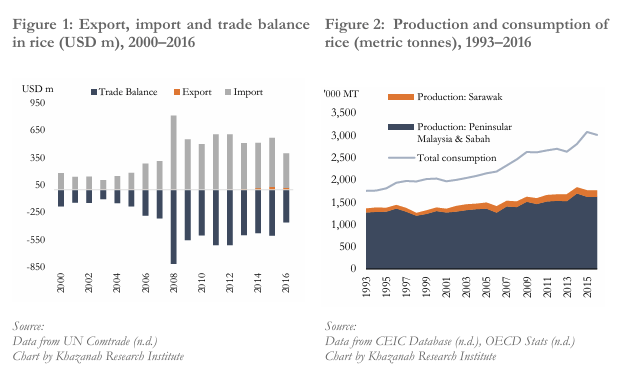
For example, Malaysia has always been a net importer of rice (Figure 1). In 2016, Malaysia recorded a –USD357.2m trade balance of rice8. In fact, this importing trend is likely to persist. The UN Food and Agriculture Organisation (FAO) has forecasted higher rice imports for Malaysia in 2018 at 950 thousand (k) MT, compared to the current 822k MT. By 2025, the amount is expected to increase to 1,276.8k MT9.
In terms of domestic paddy production, Malaysia recorded 1.76m MT in 2016, which is a modest increase from 1.36m MT in 1993 (Figure 2). Within the same time period, Sarawak produced at an average of 8.2% (including specialty rice) of the total domestic rice production.
Whilst domestic production has been increasing moderately, consumption has been increasing at a faster pace (Figure 2). Noting that consumption outstrips production in Malaysia, imported rice plays a vital role in closing the gap. However, the dependence on imports at the back of limited domestic resources and production capacity naturally lead to concerns related to food security and the nation’s ability to be self-sufficient in its rice production.
Unsurprisingly, policies have thus always tended to focus on increasing total production of paddy in bulk for cheap local rice with less focus on premium, specialty rice products. However, the latter seems to hold some potential towards reviving the industry, which could help to improve the farmers’ income and rural development. Due to this, this segment of rice production is given specific attention in this report.
2.2 Sarawak Statistics: Production and Consumption
While agriculture contributed around 8.0% to total national GDP, this share increases to 13.5% for Sarawak’s GDP in 2016, emphasising its importance to the state’s economy. As noted earlier, Sarawak produced an average of 8.2% of the total national rice production over the span of the last two decades. In terms of the agricultural landscape in Sarawak, the percentage of paddy area is 9.1%, which is the third highest after palm oil (70.9%) and rubber (10.7%) in 2013.10
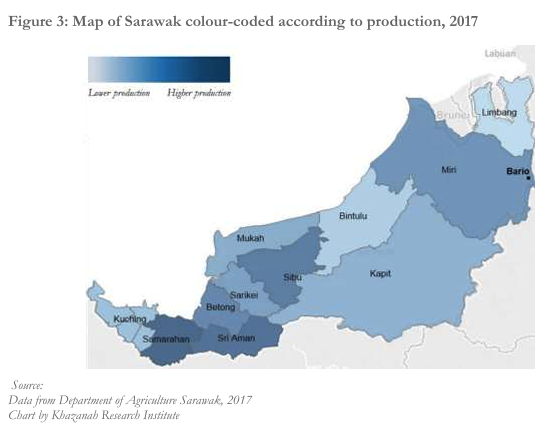
Sarawak produced 250,611 MT of paddy in 201711. This figure can be broken down further, as seen in (Figure 3), which illustrates Sarawak’s paddy production by district – the darker shades represent a higher production value. Bario is situated in the Miri division, bordering Kalimantan. Out of the 11 districts in Sarawak, Miri is only the fifth highest in terms of paddy production, with Samarahan having the largest production share (20.2%) and more than doubled the production of Miri (8.1%) (see Table 1).

Not only is agriculture important in terms of economic contribution in Sarawak, the population’s expenditure on rice as a share of total food and beverage (F&B) spending is also significantly higher compared to the national average (Figure 4). Sabah has the highest share at 11.8%, whilst Sarawak has the second highest share with 7.7%. It is also noteworthy that in the past years, the rural population of Sarawak spent more of their income on rice, relative to urban households (Figure 5).

Towards Premium Rice
Albeit the national focus is on producing sufficient rice for the population, there is also an unexplored potential in the premium rice market. In more rural states such as Sabah and Sarawak, the rice producers are typically users of traditional varieties, which are thought to have more superior qualities in terms of taste, texture, and fragrance12. Furthermore, with more than 300 unique varieties of rice, Sarawak has a large potential in the specialty rice sector13. Some examples include Bario rice, Bajong rice, Biris rice and Borneo fragrant rice.
As such, the Bario rice is an interesting example of a Malaysian rice entering the premium market. This will be covered further in the next few sections.
3. BARIO AND PADDY FARMING
3.1 Bario, the Kelabits and the Adan variety
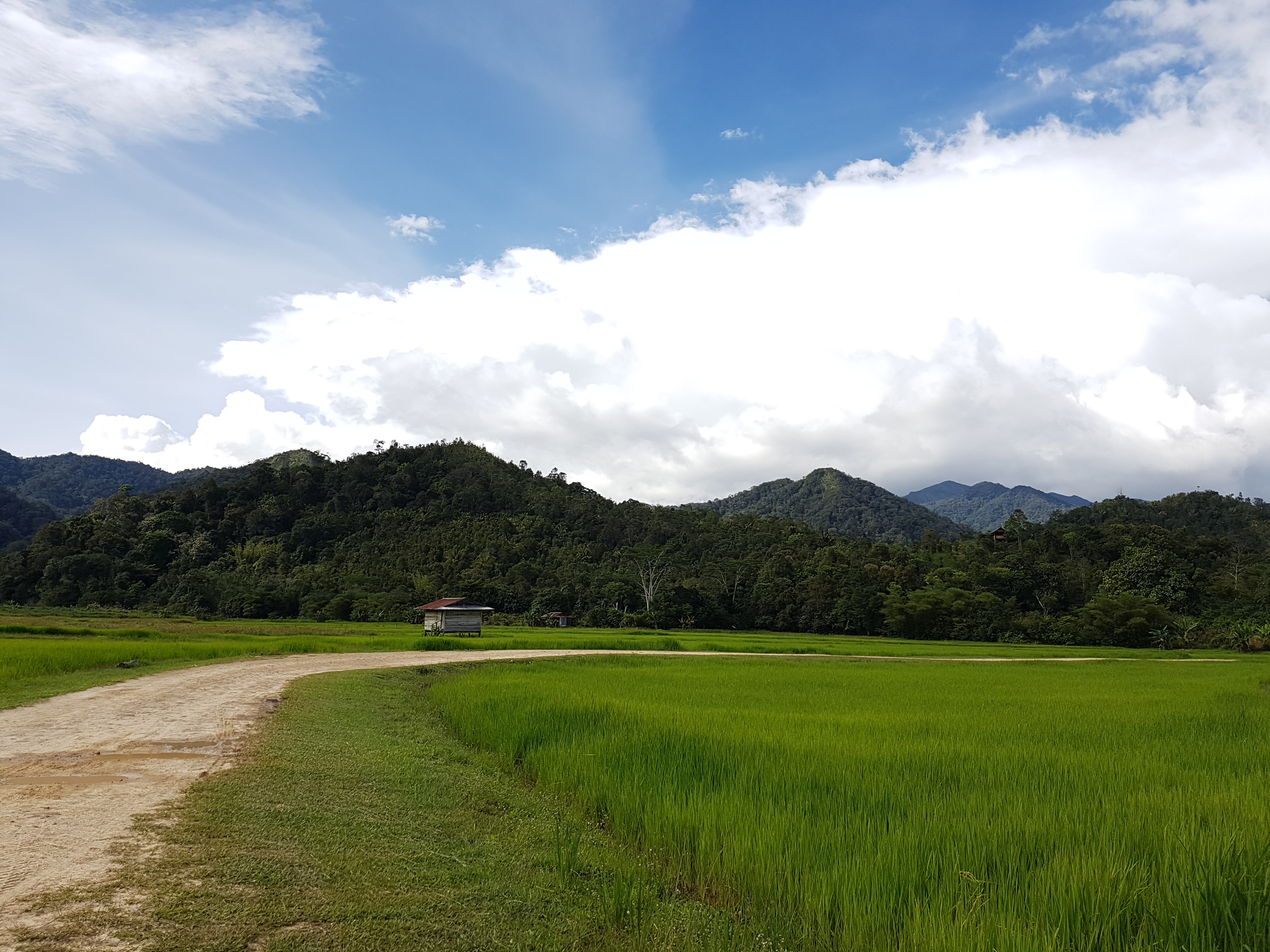
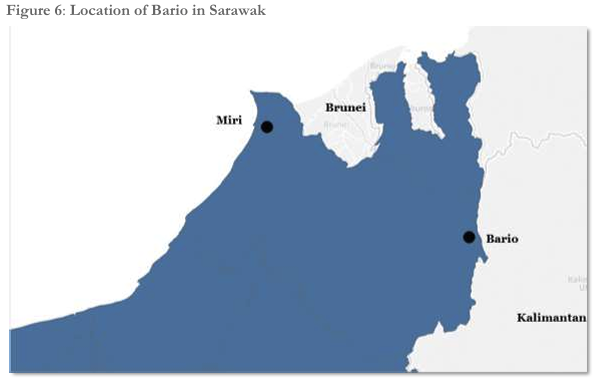
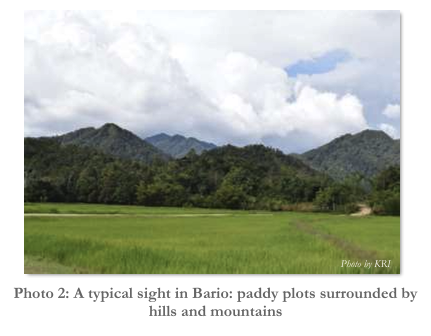
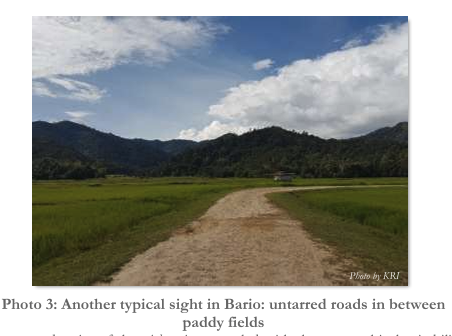
Bario, or known among its indigenous population (the Kelabit people) as Bario Asal, is an isolated village about 178km inland from Miri, coming close to the Sarawak-Kalimantan border (Figure 6). It is a small flat area at about 3,500m above sea level surrounded by hills and mountains and is the central town for the surrounding 13-16 Kelabit villages14. Due to its isolated nature, Bario is only accessible by a small twin-otter Malaysia Airlines plane or a 14-hour four-wheel drive through the tropical jungles on dirt tracks15. There are no tarred roads in Bario and solar-generated electricity was recently installed in 201616. At any given time, the population size in Bario is around 200, although during festive seasons, this can increase to more than 1,000 people17.
Subsistence paddy cultivation has always been part of the Kelabit community for many generations. In fact, the community primarily identify themselves as rice growers18. Beyond its role as the primary source of nourishment, rice is also an important element of social cohesion and symbol of status19.
The paddy planted in this highland region is a unique cultivar known locally as the Adan rice (Photo 1)

It is planted in Bario and in the surrounding areas, including villages in Kalimantan, Indonesia. Bario rice generally refers to a type of rice (Adan rice) that is planted in the area. One of the factors for the Kelabit tribes’ success in paddy cultivation is due to Bario’s unique geography – a flat open area with muddy/water-logged soil and consistent supply of fresh water from seven streams and rivers, originating from the surrounding hilly mountain areas.
The unique taste and rarity of the Adan rice, coupled with the geographical suitability of Bario, provides an opportunity for the communities in Bario to cultivate Adan rice for commercial purposes. The rice can be sold outside of Bario as a premium grade speciality rice and potentially fetch lucrative prices. This activity can help increase the income of rural farmers in Bario and help develop the town itself.
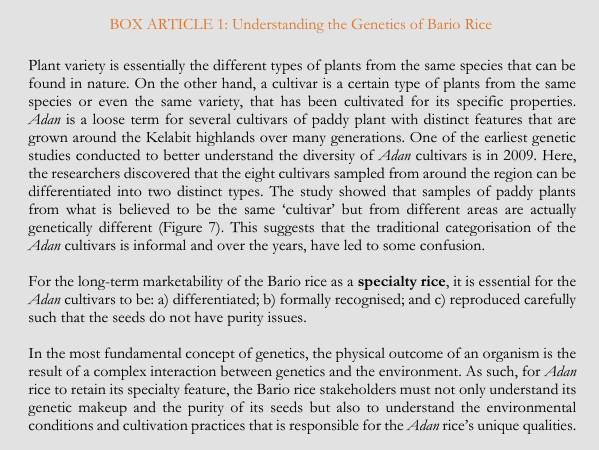
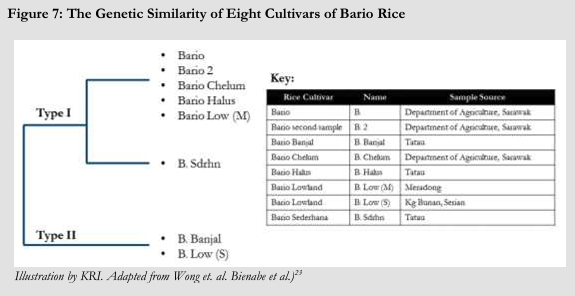
Currently, there are about eight genetically distinct Bario rice cultivars20 but interview with the locals revealed four different types: 1) fine-grain white; 2) fine-grain yellow; 3) red rice; and 4) black rice. The issue of plant purity and what actually makes a paddy plant an Adan is complex, but it is an important matter to understand. This is because it affects the long-term cultivation of this speciality rice, which is elaborated further in Box Article 121 22.
4. CULTIVATION CHALLENGES: RURAL SMALLHOLDERS IN BARIO
In the previous publication of this monograph series, the challenges of planting cocoa were explored through the lenses of Mr Koh Ah Kau, an inspiring, innovative and passionate cocoa farmer in Raub, Pahang24. This second report explores the challenges of cultivating paddy in Bario, Sarawak based on interviews with a smallholder and an agriculture developer company.
This section will elaborate four key challenges of paddy cultivation in Bario, which are:
· Farming method: the trade-off between traditional and modern farming methods;
· Geographic Indicators, Intellectual Property and R&D: the limited formalisation of the Bario rice’s identity;
· Supply chain: development and improvement of linkages; and
· Labour shortage: the ageing of local farmers in Bario
4.1 Farming method: the trade-off between traditional and modern farming methods
Traditional farming methods rely on the use of traditional seed varieties and cultivation methods in small and scattered areas. The practice has led to fragmented and potentially uneconomical cultivation of paddy. As a result, yield and income for rural farmers tend to be lower. To increase income, farmers are often encouraged to use modern farming techniques to increase their productivity. These techniques include the use of high-yielding seeds, machines, chemical fertilisers or herbicides and designated infrastructures.
“… intensive tillage, monoculture, irrigation, application of inorganic fertilizer, chemical pest control, genetic manipulation of domesticated plants […] —form the backbone of modern industrial agriculture.”
Adapted from Gliessman25
In Bario, traditional cultivation of paddy depended on rainfall patterns, the use of buffaloes for tillage and manuring, as well as manual labour for transplanting and harvesting26. While this may suffice for subsistence farming, these practices may require adjustments if the rice is to be exported and sold outside Bario as a specialty product. The reliance on weather and animals introduce risks to the consistency of quantity and quality of rice production. While paddy production has generated additional income over the years27, most households in Bario earn less than RM500 per month, and the mean monthly household income was RM59728. This level is one-third of the mean income for Sarawak and even less than the national average for rural households29.
To address the low income of rural households in Bario, modern farming methods in paddy cultivation can be a powerful strategy. However, these modern techniques are not without criticisms. In other countries, the absence of environmental sustainability considerations in modern agriculture has led to the degradation of land, incidence of pest resistance, biodiversity erosion, and water pollution30.
Similarly, in Bario, farmers are faced with the challenge of finding the right balance between productivity improvements as introduced by modern agriculture, and the management of its unintended consequences, which affects long-term development of the Kelabit community.
4.2 Geographic Indicators, Intellectual Property and R&D
Bario rice is highly demanded and known for its soft texture, unique taste and pleasant aroma. The rice could be marketed as a nutritious specialty rice product as it is rich in protein and thiamine, and low in fat31. The distinctiveness of Bario rice is potentially the result both the genetic composition of the rice variety (the Adan variety) and environmental circumstances. More specifically, environmental circumstances could be due to distinct mineral contents in the soil or the water in Bario, the highland temperature, the specific traditional farming practices, or a combination of these factors (See Box Article 1).
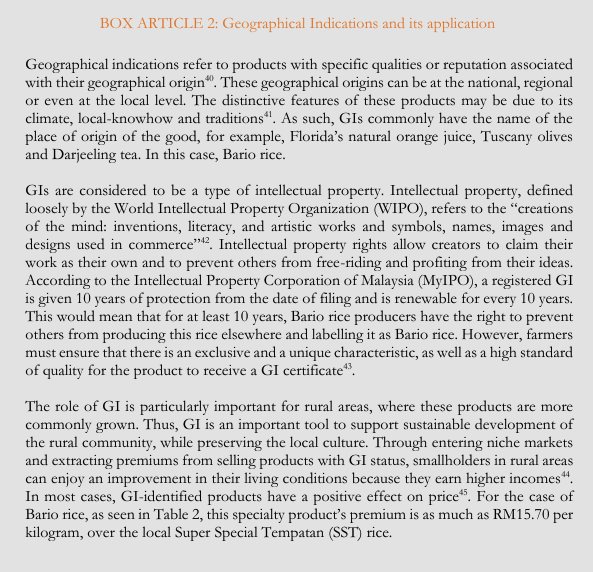
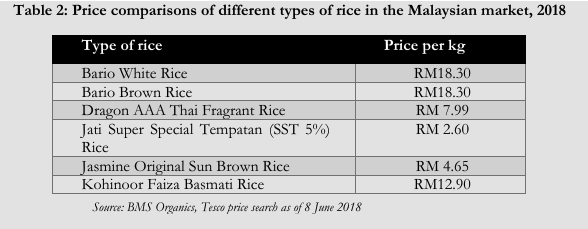
As a niche rice product, the preservation of the unique taste of the Bario rice is an important consideration, since it affects demand for the rice. Although it is equipped with certification such as Geographical Indication Wangi32 33, the value of the Bario rice is related to more than just the location of its origin, but the genetics and ecosystem that produces the distinct characteristics (See Box Article 2). Recently, villagers shared concerns about the possible effects of modern farming methods on the taste of the Bario rice. This, however, remain speculations and it is important to investigate this matter further.
Scientific inquires related to the genetic composition of the Bario rice variety is very recent34. There has not been any investigation on the role of different ecosystem factors in determining why the rice develops its unique taste and texture. Moreover, local knowhow regarding the cultivation methods of Adan variety is embedded informally among local farmers and has not been institutionalised or combined with scientific methods.
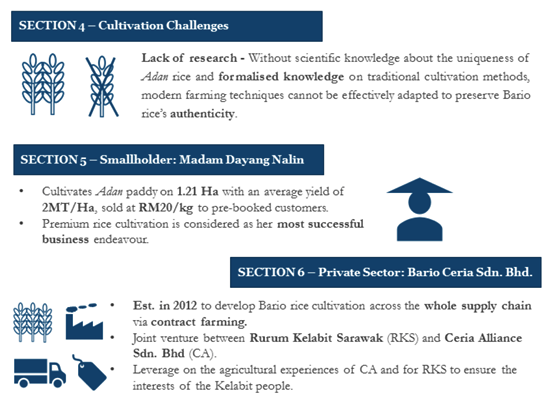
KEY TAKEAWAYS The lack of research into this specialty rice can potentially limit its long-term marketability as a niche product. Without scientific knowledge about what makes the Adan rice special and formalised knowledge on traditional cultivation methods, modern farming techniques cannot be effectively adapted to preserve Bario rice’s authenticity.
Linkages refer to the network and connections between the different segments of food production. It includes physical infrastructures, connectivity between different players in the agriculture supply chain, as well as integration to the broader market35.
To go beyond subsistence farming, infrastructures such as well-built farm roads and irrigation systems are essential to ensure consistent and reliable supply of input and subsequently, the farm output. Infrastructures are typically public goods36 in nature, and often under-invested. The cost of building infrastructure is also higher for rural and geographically-challenging areas, such as Bario, as its remoteness hikes up the cost of transporting raw materials to build the infrastructures.
Moreover, the development of private and commercial agribusiness in a rural area like Bario is hindered by exorbitant fixed costs and limited production scale. Transactional costs between different players in the paddy production segment is high – inputs are infrequently transported into Bario because of limited flights and challenging land journeys37, while distribution to consumers incur similar large transport costs. There are also communication challenges due to the unreliability of telephone signals and internet connection in Bario, leading to limited information flows from producers to potential rice buyers.
Therefore, the paddy and rice supply chain in Bario should be developed and improved. Smallholders can benefit from having a local milling facility or coordinating among themselves to bulk-buying of inputs and selling grains to downstream buyers. Unfortunately, often the development of these linkages and supply chain demands human capital, are expensive for most smallholders, and is a risky business venture for private companies.
4.3 Demographic: The ageing of farmers in Bario
Demographic shift and the ageing of farmers in agriculture is a concerning issue, with several important consequences to the rural economy. Older farmers are physically limited to perform labour-intensive tasks in farming, leading to lower agriculture output and the problem is exacerbated if farmers rely on traditional farming methods. Moreover, any introduction of new methods or machinery use to increase productivity could be inhibited because older farmers lack the necessary skills and/or interest to implement them38.
“Only old people work in Bario. Sixty-percent of its people, mostly young, go to bigger cities to work.”
Mr Thomas Hii
In Bario, the issue of an ageing population was observable – the town comprised of mainly older farmers, often retired individuals who worked elsewhere in their younger days, and children. Most young individuals migrated out of Bario to urban cities such as Miri, to continue their education and/or for better employment opportunities39.
The combination of older farmers and few young, productive farmers have led to the under-cultivation of paddy fields. Although the shortages of labour can be solved by employing foreign labour, it imposes high cost to farmers are often short-term with little motivation to invest in human capital development. Essentially, the ageing of farmers and continued shortage of labour is threatening the long-term sustainability of paddy cultivation in Bario.

5. SMALLHOLDER: MADAM DAYANG NALIN
Thus far, the paper has discussed the cocoa industry’s performance as well as the challenges faced by cocoa smallholders in Malaysia. Nevertheless, despite the drastic shrinkage in cocoa cultivation and bean production, there remain cases of successful and profitable cocoa farms in Malaysia, as we have seen in the case of Mr. Koh Ah Kau.
5.1 Background
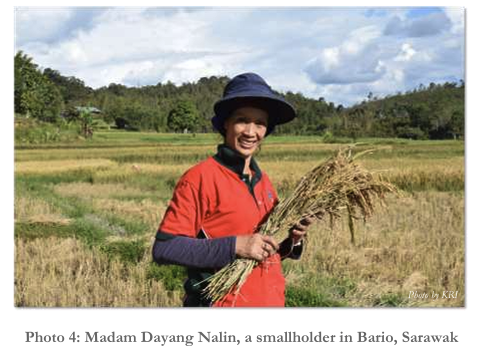
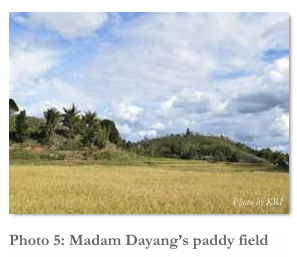
Madam Dayang Nalin is a smallholder paddy farmer in Bario who cultivates paddy on 1.21 Ha of land at Block 2B, Bario. She was born in Kampung Kuba’an and currently lives in Kampung Arur Dalan. Her parents were farmers and Madam Dayang herself has cultivated paddy for more than 10 years. Aside from paddy, Madam Dayang also farms pineapple (4 acres) and recently, coffee (6 acres, with 160 coffee trees).
Madam Dayang’s farming activities began on a part-time basis. Prior to farming, she has worked at the Bario airport for 4 years and only pursued farming full-time in September 2017. Her income is very diversified. In addition to farming, she also operates a thriving homestay business in Bario as well as a pineapple jam business under Projek Komuniti Azam Kerja initiated by Sarawak’s Department of Labour.
5.2 Paddy cultivation and premium rice market
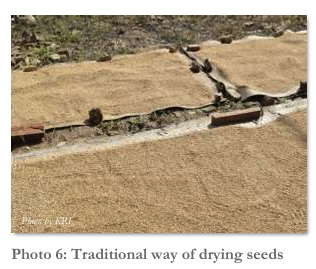
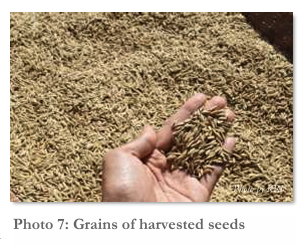
During the time of interview, Madam Dayang has planted three different varieties of paddy; fine-grain white, fine-grain yellow and red rice. She individually plants paddy seedlings on her land plot, which is the traditional method of planting paddy in Bario. Harvested paddy is also dried manually under sunlight, following the traditional method. She mentioned that her decision to use traditional drying method is because of the lower production cost incurred, in comparison to using machines to dry the harvested paddy. Indeed, as a smallholder, Madam Dayang is always on the lookout for ways to reduce her production costs.
However, Madam Dayang is not averse to the use of machinery and technology in her cultivation, especially for labour-intensive tasks. For instance, she rents machinery services for ploughing and levelling of her land from Bario Ceria, an agricultural service provider in Bario. She also hires two to three workers at times to help her on the field.
Madam Dayang estimated her harvest this season to be slightly more than her usual average of 2 metric tonnes. We were also told that the rice is sold at RM20 per kg, with no price differentiation between the different rice varieties. However, it is believed that the red and black varieties could attain a much higher price due to their higher nutritional value.
The rice from her farm is sold privately through a booking system. Buyers knows of her rice cultivation through their own social network. In the past, she has couriered up to 75 kg of rice to Kuala Lumpur for her customers. This marketing method is interesting because Madam Dayang is personally connected with her customers, who trust the quality of her rice production and are willing to pay premium prices and delivery costs to ensure the authenticity of the rice that they consume.
A challenge that Madam Dayang faces is the mismatch between supply and demand for her rice.
This season, Madam Dayang mentioned that she underestimated her cultivation, resulting in overbooked orders. As such, she had to limit her products to only a few kilograms per buyer. Furthermore, as mentioned earlier, she has (and still experimenting with) a number of different agricultural commodities so that her sources of income are diversified. Nevertheless, the premium rice industry can be considered as one of Madam Dayang’s successful business endeavours.
6. PRIVATE SECTOR: BARIO CERIA
Following the story of Madam Dayang Nalin, this section elaborates on how a public-private initiative, Bario Ceria Sdn Bhd, attempts to develop the cultivation and branding of specialty rice in Bario, Sarawak.
6.1 Developing paddy and the rural economy: Community and the private sector
Public-private partnerships (PPP) has been highly encouraged by various global development agendas and particularly in agriculture. The concept refers to different forms of relationships between the public sector and private firms. It prioritises public and social causes, in addition to the cost and benefit considerations of private investments.
In Bario, a modified type of joint venture was initiated as part of National Key Economic Area (NKEA) paddy development project, which will be discussed in the next section. While joint ventures typically involve public and private sector co-ownership of a business, the collaboration in Bario involves a Kelabit society to represent the development needs of the Kelabit community in Bario, and an established agribusiness company.
In theory, the private company can transfer knowledge of modern farming practices, assist in farm management, provide input and farm services to rural farmers. Meanwhile, community representatives in the company ensure that the interests of the local community are prioritised.
The company can be involved in the building of linkages such as farm roads and irrigation system, supported by the funds from the government. Moreover, government backing in the partnership reduces private investments’ risks and initiate a long-term outlook in establishing agribusinesses in rural areas.
However, PPP cannot solve every challenge of rural agriculture. Private firms might not be equipped to address issues such as the lack of R&D into understanding rice varieties and the ecosystems needed for its cultivation. This is because firms may have limited scientific expertise, resources and expected profitability from such endeavours. Private firms are also ill-equipped to provide for public goods that are not directly related to their business operations, such as the provision of inter-city roads and communication infrastructures. Henceforth, even with PPP initiatives, investment from the public sector is still required to fully develop the rural economy in Bario.
A successful joint venture requires a considerable time to develop a sustainable long-term relationship between the community and the private sector. It needs continuous dialogues, cooperation and the willingness between both parties to share the risks of agribusinesses and the complexity of developing the rural economy. It must be noted that joint ventures are not perfect solutions, as conflict of interests and transparency issues can still occur54. Nonetheless, this model of collaborative development strategy is still valuable to enhance the wellbeing of rural smallholders, but it requires honest discussions, consistent monitoring and transparency from all parties involved.
6.2 Introduction to the Bario Ceria Initiative
Bario Ceria Sdn. Bhd. (BC) was established in 2012 as part of the National Key Economic Area (NKEA) Bario Rice Industry Development Project initiative under the Entry Point Project (EPP) 11. The company is a joint venture between Rurum Kelabit Sarawak and Ceria Alliance Sdn. Bhd., each owning 44% and 56% shares in BC, respectively. The aim of the joint venture was to leverage on the agricultural experiences of Ceria Alliance to help develop Bario rice cultivation and for Rurum Kelabit Sarawak to ensure that the interests of the Kelabit people are prioritised. A total sum of RM17m was given to BC as part of the Phase I of the project, over a period of two years. In this agreement, BC is expected to develop Bario specialty rice spanning the whole supply chain (Figure 9).
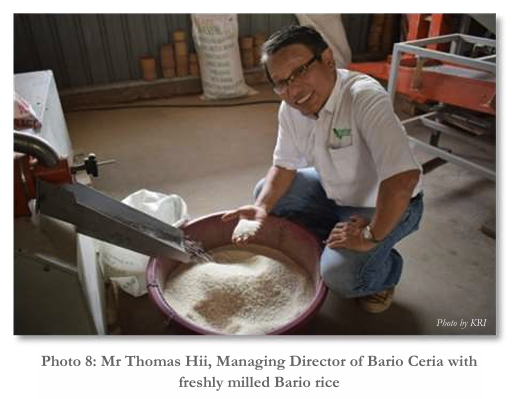
Upstream of the supply chain, the company help source input, builds infrastructures such as farm roads and irrigation systems, as well as provide machinery services. At the farm segment, BC provide extension programmes and farm management. Midstream, a rice mill was built in Bario to process paddy purchased from the farmer, into rice. Downstream, BC conducts product marketing to expand the consumer base for this specialty rice (Figure 9).

6.3 Contract Farming
For Phase I of the Bario EPP 11 project, a total land area of around 200 Ha in Bario is allocated for paddy cultivation. The area is divided into 12 blocks with an estimated total of 178 smallholders and an average paddy yield of around 2.5 MT/Ha55
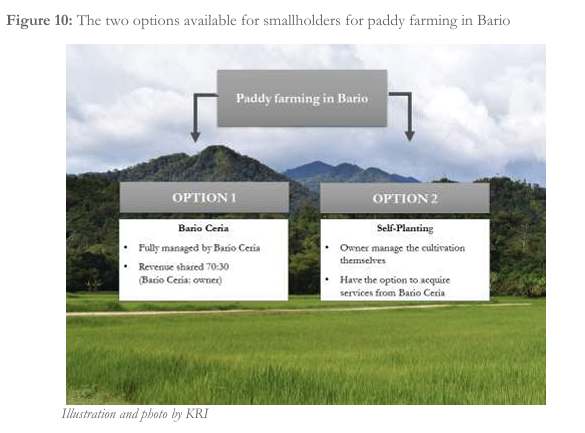
Farmers within this stipulated area have a choice of cultivating paddy via option 1 or 2 (Figure 10). For option 1, a farmer has a contractual agreement with BC for a given season. In this season, BC will fully manage his/her land with a division of 70:30 (BC: farmer) of the final profit made. For option 2, a farmer cultivates the land himself and utilise BC’s services as and when needed. Madam Dayang, introduced in the previous section, is one of the smallholders in Bario who opts for option 2 when KRI visited and interviewed farmers in this area.
BC also plays the role of an extension service provider, having its trained managers to provide advice and oversee paddy cultivation in Bario. As the contract is renewed for each planting season, a farmer may interchange between options 1 and 2, depending on his resources and ability. Option 1 addresses issue of ageing farmers in Bario, as many younger Kelabit landowners are working elsewhere but still intend to generate income from cultivating paddy.
BC aims to help with land cultivation only temporarily, until the return of the landowners to Bario. Mr Hii also shared that the company hopes more farmers choose option 2 than option 1 as farmers become more skilled. Moreover, this option meant that the cultivation of the Bario rice will remain to be an essential activity for the Kelabits and lucrative enough to support their livelihoods, given the integration of this product into the specialty rice market.
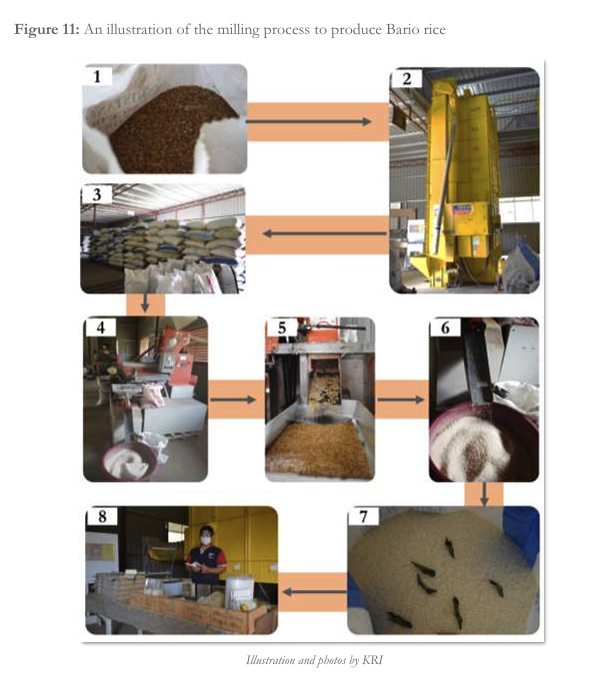
6.4 Downstream processes: milling & marketing
Once harvested, the grains are transported to a nearby BC milling factory and sold for downstream processing. Once packaged, BC is responsible for product marketing, branding and the export of packed Bario rice to Peninsular Malaysia and to other countries (Figure 11). However, BC is not the only seller of Bario rice. Bario farmers can sell the rice directly to consumers, or to other rice companies and market it as Bario rice56 as long as it meets the GI product requirements.