




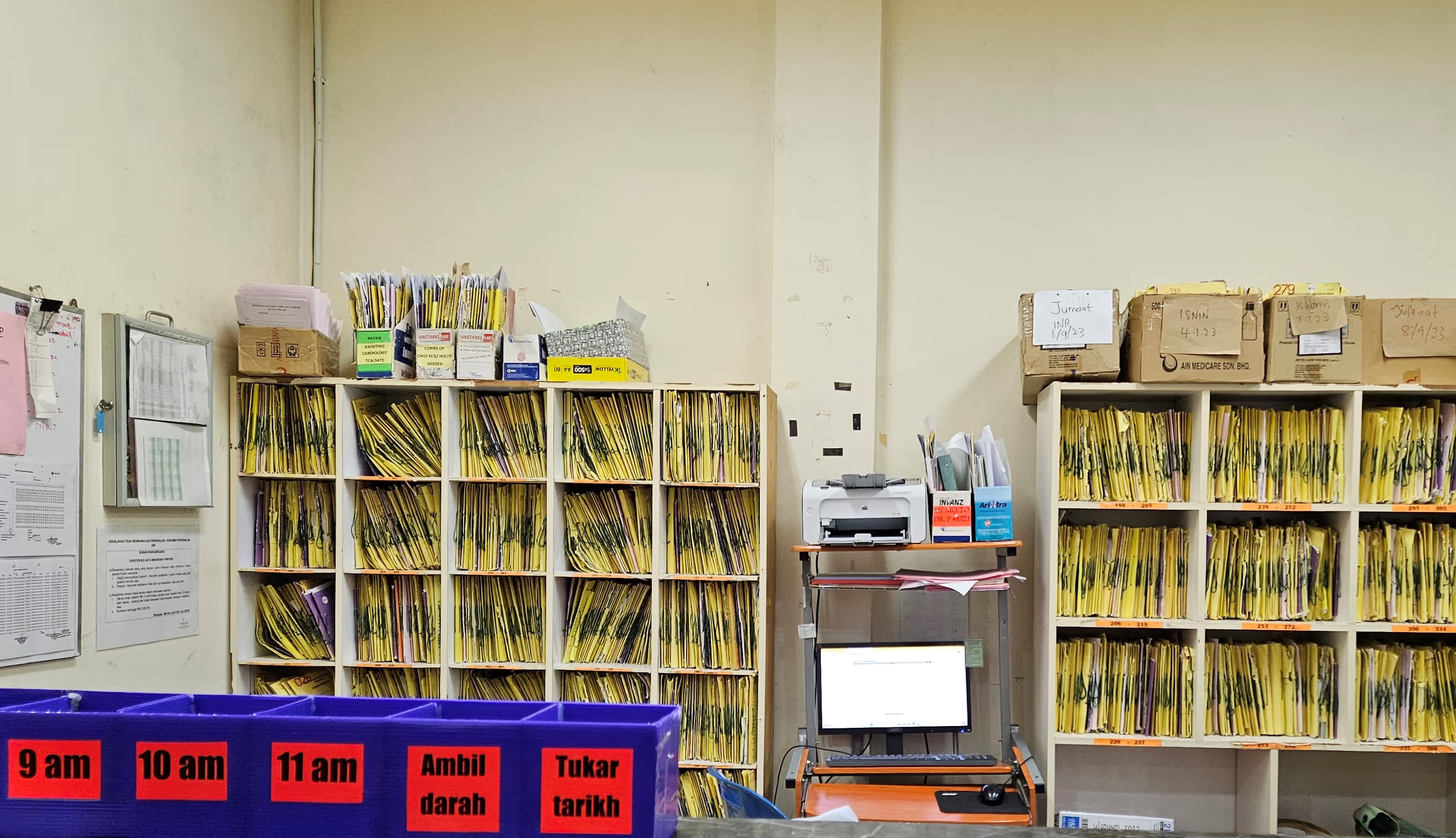






In the past three decades, the Malaysian government has made significant efforts to digitalise its public healthcare system towards improving the quality and efficiency of its healthcare services while enhancing patient care.
Since the publication of the 1997 Telemedicine Blueprint, there has been a vision for the nation to have digitalised patient records that are able to follow a patient across their lifespan. The backbone of this vision is a network of integrated healthcare facilities that allow health records to be shared between different healthcare providers and facilities, specifically an electronic health records (EHR) system.
This paper has examined the Ministry of Health's (MOH) efforts to digitalise public hospitals using three case studies:
- Total Hospital Information System (THIS), a comprehensive hospital information system purchased off-the-shelf from vendors
- Sistem Pengurusan Pesakit (SPP), a customised system built to MOH specifications by external vendors, and
- i-Pesakit, an in-house system developed at a teaching hospital.
Our analysis shows that similar challenges exist across the case studies, such as procurement processes, supporting infrastructure, system design, system adoption, change management, interoperability and standardisation, and data governance.
Drawing on lessons learned from these case studies, we propose the following seven policy recommendations for the implementation of a comprehensive national EHR system:
- Increase investment in foundational healthcare digitalisation including total life cycle costs and infrastructure readiness
- Improve internet connectivity and upgrade existing healthcare facility infrastructure to ensure systems can be adopted and patient information can be shared
- Prioritise user-friendly and care-centric system design to enhance healthcare provider workflows and encourage user acceptance
- Conduct sufficient training of end-users
- Continue with iterative stakeholder engagements beyond deployment to ensure systems are properly maintained and upgraded to be fit for purpose
- Enforce minimum data standards across the healthcare landscape to allow for interoperability across healthcare facilities
- Establish clear public messaging around data access and data privacy