







This paper’s objectives are to: (i) define features and mechanisms of institutionalised wage bargaining systems (IWBs); (ii) compare the IWB systems of selected countries and identify key determinants of success in wage and employment outcomes; (iii) recommend policy approaches to strengthen worker bargaining power in Malaysia. A combination of literature reviews, primary source analyses, stakeholder interviews, and analysis and visualisation of industrial relations and labour market data are applied to meet these objectives.
The IWB system of each country is classified according to high, moderate, or weak levels of three features
- Centralisation: the degree to which bargaining outcomes are decided and respected at multi-employer levels
- Coordination: the extent to which wage negotiations are coordinated across the actors within an economy and include broader economic considerations
- Inclusivity: the extent to which formal mechanisms extend the terms and gains of collective bargaining to non-unionised and/or non-regular workers
We apply this method to seven countries (Belgium, Italy, Germany, Japan, South Korea, United Kingdom and Singapore) as case studies and consider their IWB systems in the context of the labour market outcomes they produce. The country selection criteria included: (i) their status as advanced economies; (ii) their reflection of a variety of histories, approaches, geographies and strengths/weaknesses; (iii) data and literature availability.
The summary of policy lessons from the case studies are below:
- Belgium excels (high) across all three features and its IWB system demonstrates both a high degree of bargaining power and strong wage outcomes without compromising employment outcomes.
- Italy and Germany exhibit contrasting degrees of flexibility within the European context, cautioning against both hyper-rigidity (Italy’s high centralisation and inclusivity, but weak coordination) which compromises employment outcomes and poorly regulated flexibility (Germany’s high coordination, but moderate centralisation and weak inclusivity) which compromises wage outcomes.
- Japan (high coordination, but weak centralisation and inclusivity) and South Korea (weak across all three features) are two prominent Asian economies that demonstrate how weak inclusivity can lead to the development of an insider-outsider dynamic which threatens the wellbeing of non-regular workers (women, migrants, contract workers).
- The United Kingdom (weak across all three features) and Singapore (moderate across all three features) allow us to compare the evolution of IWBs within the Commonwealth and caution against approaches that undermine the ability of unions to operate both effectively and independently.
The following are policy proposals for a future Malaysian IWB system. These proposals attempt to balance three labour market objectives: (i) improving Malaysia’s wage structure; (ii) ensuring a flexible labour market; (iii) inclusion of non-standard and migrant workers.
- Moderate centralisation: Tripartite committees (made up of government, workers’ unions and employer’s unions) at the industrial level create a clear schedule of minimum wages for each occupation determined over the career of that occupation. This schedule can vary according to region, as costs and business realities differ across the country. Any derogation at the enterprise level from industrial agreements would have to be argued in the Industrial Court.
- High coordination: The Malaysian government devises a fixed schedule of wage negotiations every two years and first targets industrial groups with the greatest pattern-setting power to influence the overall wage structure. Regional wage schedules should incorporate local economic and business realities to ensure flexibility.
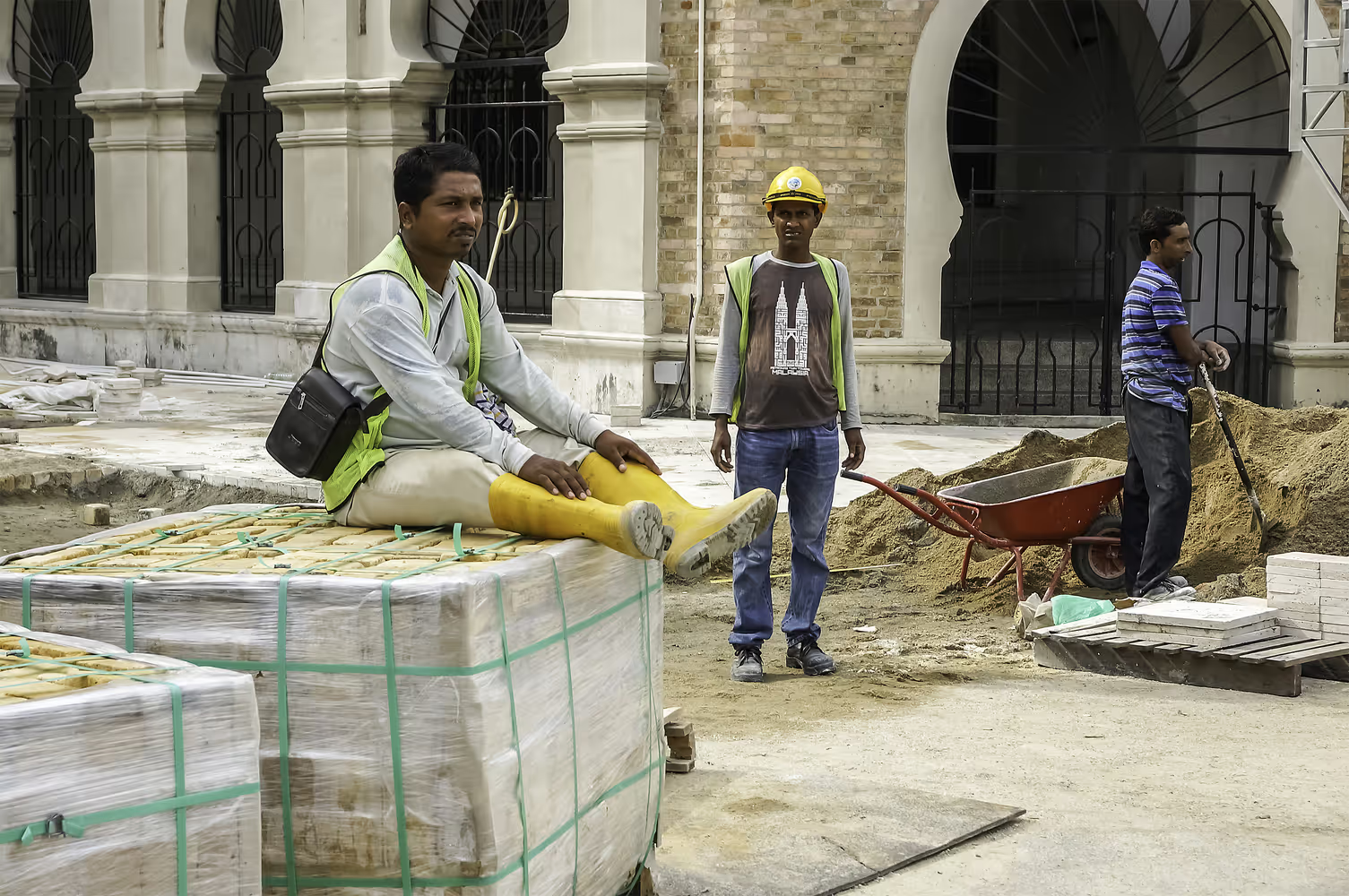
- High inclusivity: Wage agreements should cover all workers within concerned industries, including contract and migrant workers. This would prevent the development of an insider-outsider dynamic and ensure that as large a portion of the workforce as possible is covered by the agreements.
A few enabling factors are required for the proposed system to function effectively and sustainably. Workers unions and the labour movement must be strengthened and allowed to develop the capabilities to participate in an IWB system. Employers should be appropriately organised into industrial-level unions of their own. The government will have to build the required internal knowledge, machinery and capacity to sponsor and facilitate wage negotiations. Finally, undocumented migrant labour and informal employment will have to be minimised for an IWB system to effectively alter the wage structure.