







Introduction
Cities and urban areas are home to more than half of the world’s population, accounting for approximately 55% of the global population. The United Nations projects that this proportion will increase to 68% by 20501. In Malaysia, approximately 77.9% households reside in urban areas. Several states such as Selangor, Pulau Pinang and Melaka have urbanisation rates exceeding the national average, with more than 90% of their households living in urban areas2.
As urban populations continue to grow, cities face increasing pressure to provide essential infrastructure and services that are adequate, accessible and affordable. However, access to such services is not distributed equally, even among households living in the same city. This article discusses the unequal distribution of urban infrastructure and explores how recent energy price volatility may further widen existing inequalities in accessing essential infrastructure that sustains urban life. It argues that rising energy costs expose different vulnerabilities that are influenced not only by household income but also by where people live, the type of housing they occupy and how cities are planned and managed.
Unequal distribution of urban infrastructure and services
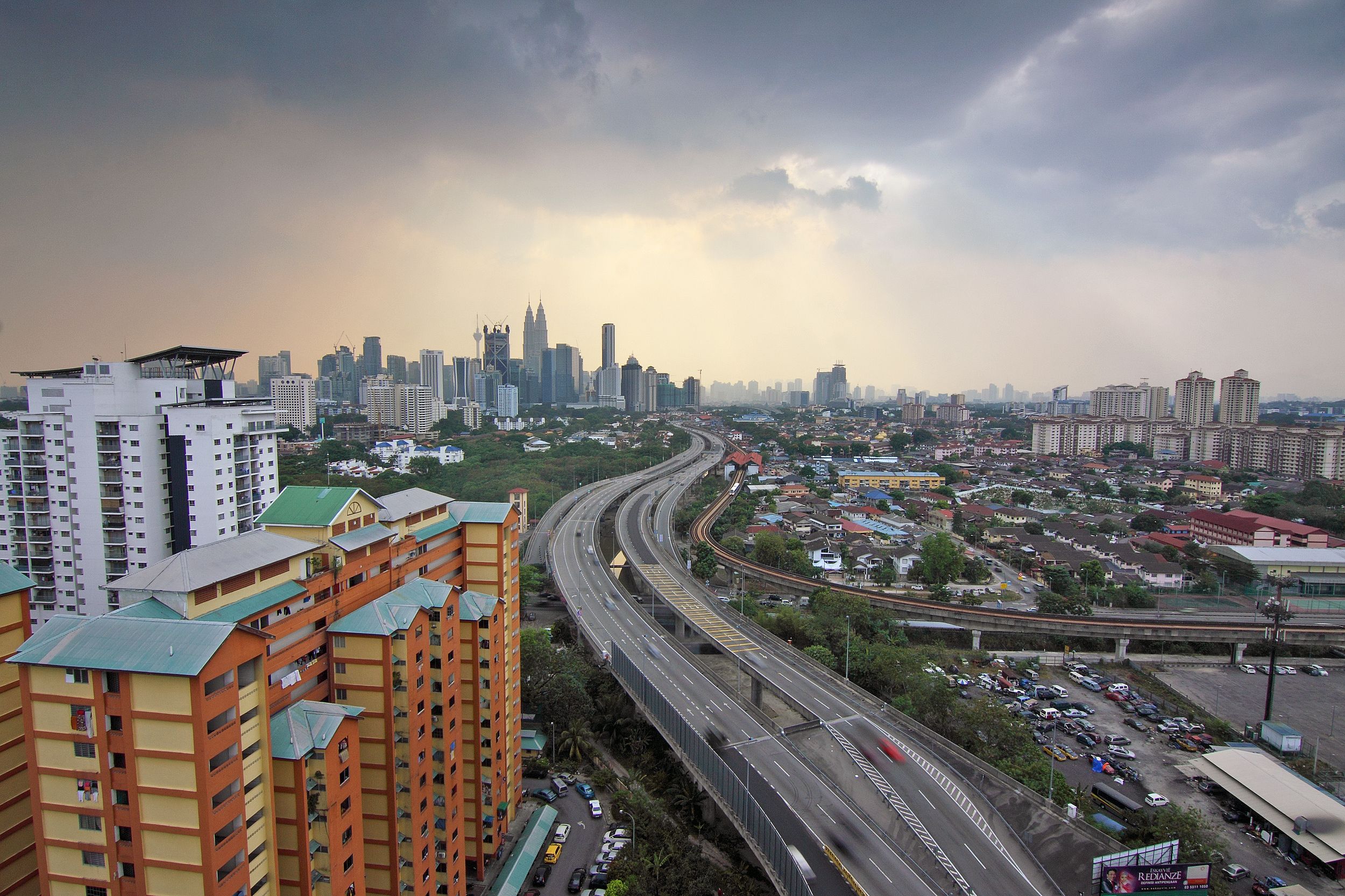
Cities depend on a wide range of physical and social infrastructure to sustain daily life and economic activities. Physical infrastructure such as transportation networks including highways and rail systems enables the movement of people, goods and services. Utilities such as water supply and electricity support both domestic and commercial activities. Housing provides households with a place to live while connecting them to jobs and other key urban amenities. Meanwhile, social infrastructure such as schools, healthcare facilities and community spaces creates an environment that enables households to meet their daily needs and contribute to the overall vitality of cities. Some of these infrastructure systems, particularly transport networks and utilities are regarded as the ‘critical arteries and nodes’3 for cities because of their visible contribution to connectivity, productivity and local economic development.
However, not all urban infrastructure and services are equally available and accessible. Although services such as water supply, sanitation and waste collection are essential in keeping cities healthy and functioning, access to these services remains uneven among urban households. The disparities in accessibility are evident in the Basic Amenities Survey Report 2024 published by the Department of Statistics Malaysia4. Among the basic amenities reported, garbage collection recorded the lowest level of service coverage. While access to garbage collection at urban households' living quarters increased from 82.8% in 2022 to 87.5% in 2024, the share of urban residential areas5 having access to garbage collection services declined from 14.0% to 10.3%.
Urban areas are generally expected to have near-universal access to essential services. However, statistics show that approximately 2.3% of urban households still lacked access to garbage collection services in 2024 while 2.8% remained without access to a piped water supply. The disparities are also evident across states. For example, in the Federal Territories and Pulau Pinang, all urban households had access to garbage collection services, either through door-to-door collection or shared collection points located within a reasonable distance of their homes. In contrast, 7.5% of urban households in Johor remained without access, compared with 0.7% in Selangor, with two districts recording 3 – 5%6.
Although these proportions may appear small, they represent thousands of urban households that continue to lack access to basic services, despite living in urbanised areas. Given their higher population densities and generally greater fiscal and administrative capacity, urban local authorities are expected to provide more comprehensive coverage of basic services than their rural counterparts. Yet, gaps in access suggest that unequal provision of basic urban infrastructure and services remains a challenge even in most urbanised states in Malaysia.
The impact of the energy price volatility cascades to city operations
Energy is the backbone of a city’s growth and functioning. It powers critical infrastructure and services - enables transportation networks to move people and goods, heats and cools buildings, supports water supply and waste management systems, and facilitates the production of goods that households rely on every day. As cities become more reliant on energy, disruptions in supply or increases in energy prices can have wider impacts on urban life.
“When power supply fails, cities stop working. When energy supply is uncertain, cities falter.”
Un Habitat (2006)
In Malaysia, global energy price volatility has both direct and indirect impacts depending on the type of energy used. Electricity is generated primarily from coal and natural gas, and bioenergy sources7. As coal and natural gas are traded in global markets, increases in global energy prices can increase electricity generation costs8. Whether these higher costs are passed on to consumers depends on domestic electricity pricing mechanisms and government subsidy policies. In contrast, increases in petrol and diesel prices have a more immediate impact by raising transportation, logistics, and municipal operating costs.
As a result, electricity-intensive infrastructure including water treatment plants, pumping systems and common facilities in stratified buildings may face higher operating costs when prices increase. Meanwhile, fuel-intensive services such as public transport, solid waste collection and the transportation of goods are more directly affected by higher petrol and diesel prices, thus affecting the affordability and delivery of essential urban services.
Households are not affected equally
Households may experience the impact of rising energy costs through higher prices for goods, utilities, and services, which affect their overall cost of living. However, these impacts are not experienced equally across households. Higher-income households generally have greater financial capacity to absorb unexpected increases in expenses. Lower-income households are often the most vulnerable, although many qualify for government subsidies that help cushion the impact of rising costs. At the same time, the additional burden faced by middle-income households, often referred to as the ‘sandwich group’ should not be overlooked. These households may exceed the eligibility criteria for some government assistance yet may not have sufficient financial capacity to absorb any anticipated rise in living costs.
Rising energy prices expose different vulnerabilities across households, and the extent of impact depends not only on household income but also on where people live, the type of housing they occupy and how cities are planned and managed. The following subsections explore how these factors influence households’ exposure to rising energy costs.
Transportation costs
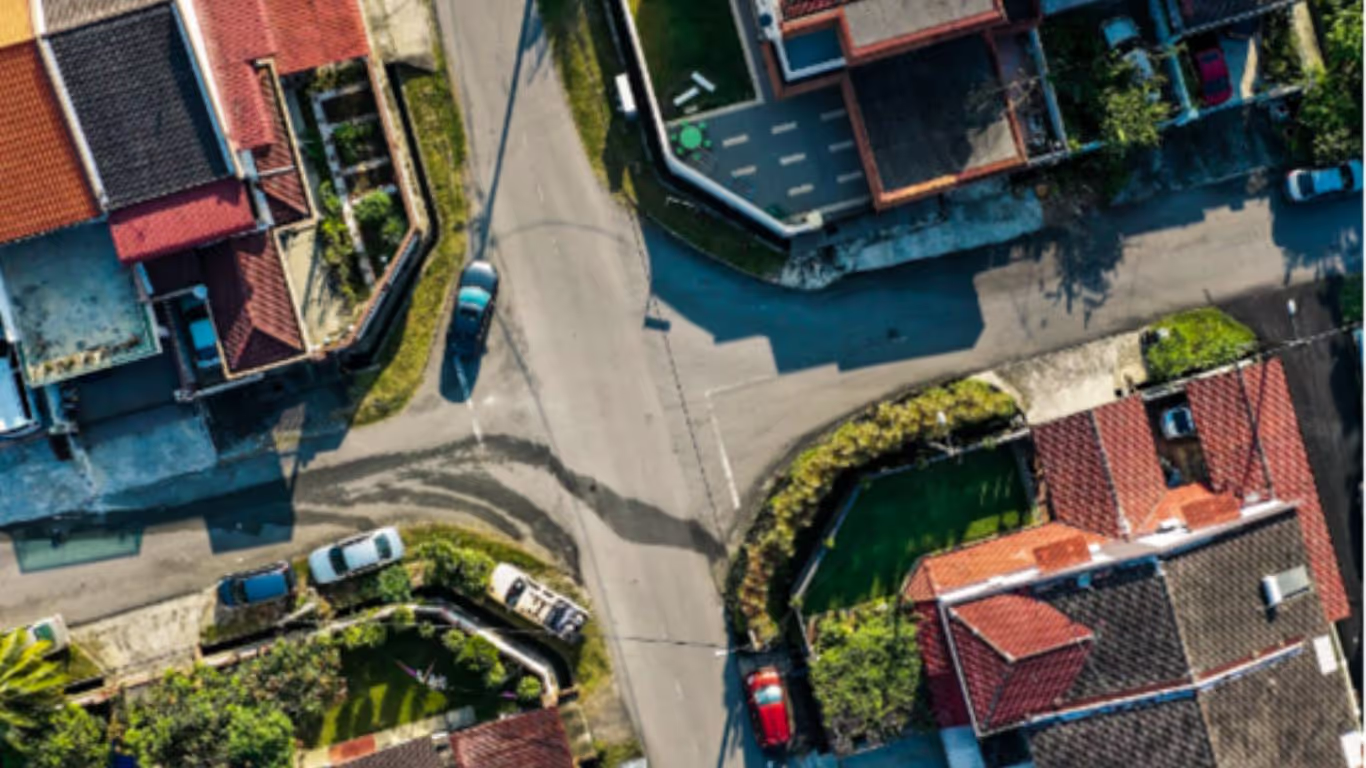
Urban sprawl has enabled the delivery of affordable housing options outside the city centres. With rising house prices in urban centres, many middle-income households are left with the choice of purchasing affordable homes in suburban or urban areas in neighbouring states while continuing to work in the city. They get bigger houses for an affordable price. Although this reduces their housing expenditure, it often comes with a trade-off in the form of higher transportation costs. Longer commuting distances make private vehicles a necessity, thus increasing transportation costs for households. As a result, households living in secondary cities/sub-urban areas are more exposed to rising fuel prices than those living closer to their workplaces.
The BUDI95 fuel subsidy helps to cushion the impact of higher fuel prices. However, the relief varies according to households’ fuel consumption and commuting needs. For households travelling long distances every day, as well as those working in the e-hailing and delivery sectors, fuel remains a major expense despite the subsidy.
Although higher fuel prices may encourage households to take up public transport, this is not always a practical option. Many urban neighbourhoods continue to face first- and last-mile connectivity issues, limited bus coverage and infrequent public transport services, making it difficult for commuters to access rail stations or bus services. Recent KRI research also highlights how these connectivity gaps influence travel behaviour9. Many commuters continue to rely on private vehicles and endure daily traffic congestion because they perceive it offers greater flexibility, control over the timing of departure, route and pacing to their destinations10. This shows that urban infrastructure inequality is not only about whether infrastructure exists, but also whether it provides reliable and accessible services. Households living further from city centres may have access to roads and public transport, yet inadequate connectivity increases their dependence on private vehicles, leaving them vulnerable to rising fuel prices.
Electricity consumption
Besides transportation costs, households also experience the indirect impact of rising energy costs through changes in electricity bills following revisions to Automatic Fuel Adjustment (AFA) mechanism11. The rising global fuel prices, partly driven by geopolitical tension resulted in the AFA shifting from a rebate to a surcharge in May 202612. Although it is reported that about 85% of domestic consumers consuming less than 600 kWh per month remain exempt from the surcharge13, changing consumption patterns such as more people working from home14 and greater use of air conditioning during periods of extreme weather may cause some households to exceed this threshold and incur higher electricity bills.
However, the impact may also vary across households because electricity consumption is influenced by household characteristics including housing size, household composition and appliance ownership15. A study on urban households’ energy consumption in Seremban found that households with higher incomes tend to consume more electricity due to greater financial capacity to purchase and consume electrical appliances16. As household income increases, households are more likely to own appliances such as air conditioners, refrigerators, washing machines and other household devices that consume substantial energy. For many middle-income households, owning these appliances also reflects their improving living standards. As a result, they may be more exposed to changes in electricity prices than lower-income households with lower electricity consumption.
Stratified vs landed residences
The impacts of rising energy costs also differ by housing type. In urban areas like Kuala Lumpur and Selangor, many affordable housing programmes and other relatively affordable private homes are delivered as high-rise developments, making them a common housing option for middle-income households. At the same time, there is an increasing share of new housing supply that consists of service apartments or mixed-use development with commercial titles. Data show that the supply of serviced apartments in Kuala Lumpur and Selangor has grown by more than by 400% between 2015 and 202517. With the rise in such developments, house buyers are left to consider them among their available housing choices.
Households living in stratified buildings such as apartments and condominiums face an additional burden because they share the cost of operating and maintaining common facilities. These buildings rely heavily on shared facilities, including lifts, water pumps, lighting, security systems, swimming pools, gyms and community halls, that consume substantial amounts of electricity18. As energy prices rise, the operating costs of these shared facilities increase as well, leading to higher maintenance charges for all residents, regardless of income. The burden may be even greater in residential developments with commercial titles. While residential-title buildings are generally subject to domestic electricity tariffs, serviced apartments and mixed-use developments are subject to commercial utilities rates and higher building operating costs. As a result, residents in these developments may face higher maintenance charges despite living in homes that serve the same residential purpose.
Unlike households living in landed properties, residents in stratified buildings have limited ability to reduce their overall energy expenditure. Although they can reduce electricity consumption in their individual units, they have little control over electricity consumption in common areas. They are still responsible for financing the operation and maintenance of common property through maintenance fees. Whereas, residents in landed properties have greater control over their own energy usage19 because they do not bear the cost of maintaining shared facilities.
The impact also varies by different types of high-rise developments. Low-cost flats generally have fewer or no shared facilities, resulting in lower electricity consumption in common areas. Their maintenance charges are also relatively low, as they mainly cover basic services such as lighting, cleaning, and general upkeep. In contrast, private condominiums often offer a wider range of high-end shared amenities, leading to higher building operating costs.
The differences also extend beyond energy consumption to the way urban services are delivered. It is common for serviced apartments and mixed-use developments in urban areas that services such as waste collection are not provided directly by the local authority. Instead, Joint Management Body (JMB) or Management Corporation (MC) must appoint private contractors to provide these services20, with the costs borne by residents through maintenance fees. This arrangement may cause residents to feel they are not benefiting from the assessment tax they pay to their municipality, as they still have to manage basic services such as garbage collection themselves, which are typically provided by local authorities in landed residential areas, low-cost housing, and public housing. Despite having to pay assessment taxes, access to such services differs.
The above examples show how periods of energy uncertainty can create new dimensions of urban inequality that extend beyond differences in household income. Households' exposure to rising energy costs is also shaped by the design, facilities and management arrangements of the buildings in which they live as well as the way urban services are delivered across different types of housing developments.
Conclusion
Cities rely heavily on energy-intensive infrastructures and services. Hence, disruptions in energy availability and rising energy prices can expose hidden inequalities in urban infrastructure, affecting the delivery, accessibility, and affordability of essential urban services that keep cities functioning.
Moreover, the burden of rising energy costs is not shared equally among urban households. While some impacts, such as rising food prices and logistical costs, are experienced across the city, others affect households differently depending on where they live and the type of housing they occupy. For example, households with similar income levels may experience different impacts depending on their residential location. Those living further from employment centres may face higher transportation costs due to longer commuting distance and heavy reliance on private vehicles. Likewise, households living in private high-rise developments with extensive shared facilities may face higher exposure to rising energy costs through higher maintenance fees compared to those living in low-cost apartments. Households living in serviced apartments or commercial-title developments may also experience additional burden in accessing and financing certain urban services such as waste collection.
It is important to recognise that the cost of failing urban infrastructure and services goes far beyond financial losses. When essential infrastructure fails or is poorly maintained, the effects are felt across the city. For example, urban flooding can become more severe when rapid development reduces green spaces and water retention areas21, limiting the cities’ ability to cope with heavy rainfall. Similarly, disruptions to essential urban systems such as water supply, sanitation, waste management, and transport services can affect public health, environmental quality, economic activities, and the overall well-being of communities. As cities continue to grow, building urban resilience requires ensuring that urban infrastructure remains accessible, affordable and reliable and well-maintained to keep cities healthy and liveable.