
From Income to Wellbeing: The State of Households 2026
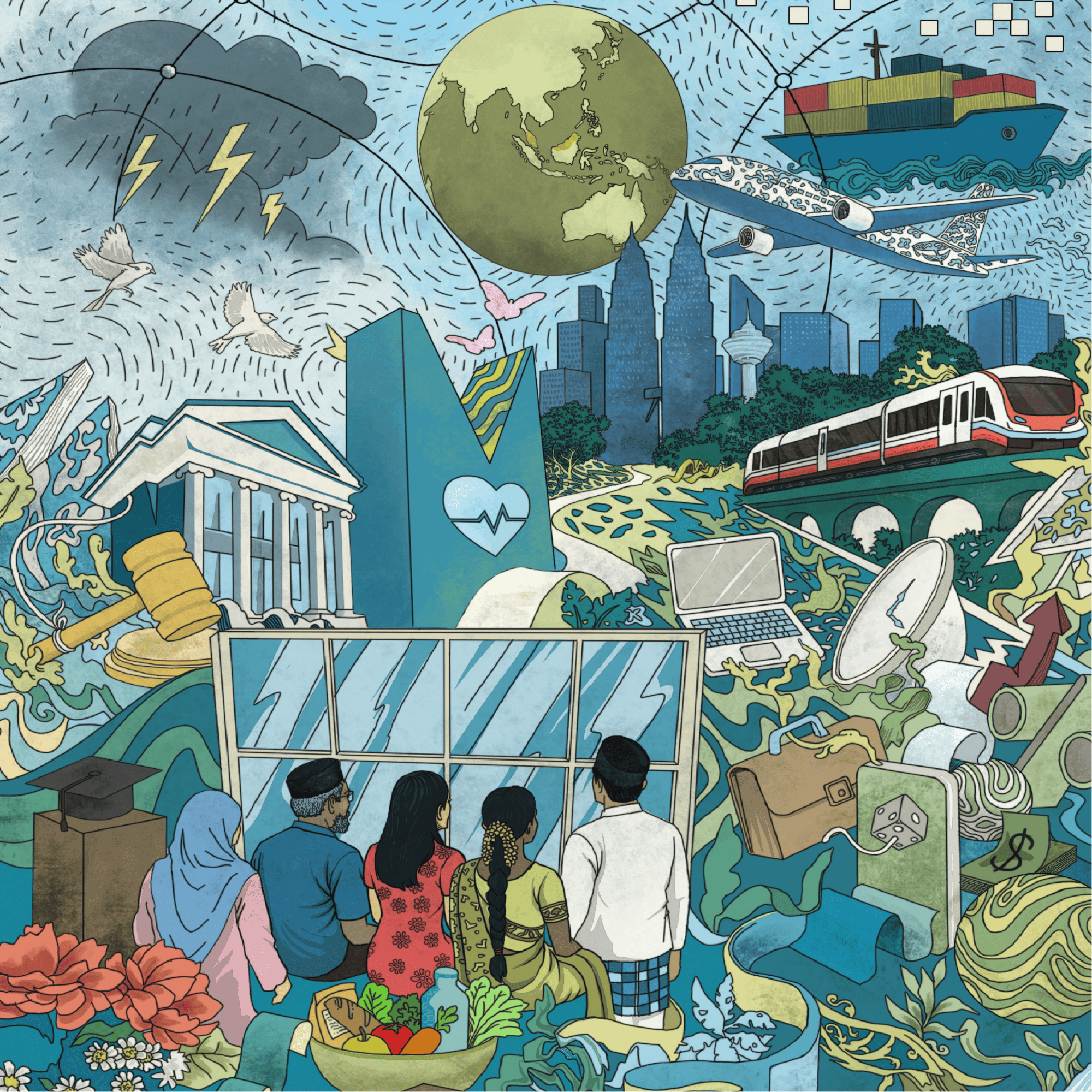
23 October 2026, Kuala Lumpur — Malaysian households have made progress across several dimensions of wellbeing, with economic and social wellbeing improving, household incomes increasing, labour force participation rising and access to essential services becoming almost universal. At the same time, Malaysia’s rapid urbanisation and concentration of economic activity in particular areas have contributed to differences in income and opportunities, while household circumstances and exposure to risks also shape how wellbeing is experienced.
These findings are highlighted in KRI’s latest report, From Income to Wellbeing: The State of Households 2026. The sixth edition of KRI’s flagship report takes a broader view of household wellbeing, drawing on economic, social and health data to look beyond income and expenditure and examine the factors that shape how households are doing.
Malaysia is making progress across several dimensions of wellbeing
The Malaysian Wellbeing Index (MyWI) shows that economic and social wellbeing have steadily improved since 2000, while environmental wellbeing, after declining between 2005 and 2008, has been recovering. Malaysians are also generally classified as ‘happy’. The Malaysian Happiness Index (MHI) increased from 6.48 in 2021 to 7.60 in 2024.
Economic indicators similarly point to a strong post-pandemic recovery. Median monthly household income reached RM7,017 in 2024, growing by 5.1% per year from 2022, while the labour force participation rate also rose to 70.6% in 2024, compared with 69.3% in 2022 and 68.7% in 2019.
Spatial concentration of economic activities drives differences in income
Malaysia’s rapid urbanisation has gone hand in hand with agglomeration, as economic activity became increasingly concentrated in cities. Business establishments are mostly concentrated in Selangor and Kuala Lumpur, where median wages are higher than in other parts of the country.
Wages account for 62.9% of household income. In 2024, median urban and rural wages were RM2,851 and RM1,698 respectively, while rural median household income was 56.4% of urban median household income.
This spatial concentration is also reflected at the district level. Almost half (46.2%) of Malaysian households live in the 22 of 166 districts that recorded median household incomes above the national median of RM7,017. Meanwhile, 111 districts recorded poverty rates above the national rate of 5.1%.
Household expenditure continues to grow, limiting residual income and pressuring lower-income households
Median household expenditure reached RM4,758 per month in 2024, growing by a compounded average growth rate (CAGR) of 5.3% from 2022 in nominal terms. Cumulatively between 2019 and 2024, expenditure rose by more than 15% among the lower 70% of households in the income distribution, while barely changing for the top 10%. For the bottom 10%, expenditure increased by 21.3%.
The bottom 10% retained only 1.8% of their gross income after consumption expenses in 2024, down from 10.8% in 2019, leaving less room to absorb rising living costs. This residual does not account for other payments such as taxes, remittances to other households or loan repayments, which would further reduce the amount available for savings.
Wellbeing goes beyond income and expenditure
The report highlights that income and expenditure alone do not reflect all the components of wellbeing. Households with similar incomes can experience different levels of wellbeing depending on circumstances such as age and gender, or their access to essential services.
Changing food environments and lifestyles also have implications for health. In 2024, households spent more on eating out than on food at home, averaging RM902.70 per month compared with RM875.80. Meanwhile, 54.4% of Malaysian adults were overweight or obese in 2023, and physical activity declined between 2019 and 2023.
Access to basic amenities is almost universal
Despite economic differences, access to basic amenities has improved substantially. Nearly 100% of households had access to treated piped water, electricity and telecommunications in 2024.
Access to social infrastructure has also improved. In 2024, 97.8% of households were located within 5 km of a public health facility, 98.7% were within 5 km of a primary school and 95.9% within 5 km of a secondary school.
However, income and access to basic amenities alone do not capture all the factors that shape wellbeing. Basic provision of services and infrastructure does not guarantee improved wellbeing, nor does higher income by itself guarantee greater happiness.
Age, gender and employment circumstances also matter
Malaysians are living longer, but not necessarily healthier. The transition towards an ageing population is uneven across states. Households headed by persons over 65 had a median income of just over half the national median, while the prevalence of non-communicable diseases (NCD) increases with age.
Women continue to have lower labour force participation rates than men, especially in rural areas, where there may be fewer formal employment opportunities compatible with caregiving responsibilities. A gender wage gap also persists across the working-age life course. The report highlights accessible, comprehensive and affordable care services as a potential way to address ageing and caregiving challenges.
Employment quality matters alongside wages. Underemployment occurs when workers are employed below their skills or qualifications, while formal employment opportunities are concentrated in urban areas and rural regions have more informal work arrangements. Broader social protection coverage could help mitigate the risks faced by workers.
International risks can affect households unevenly
Household wellbeing is also exposed to international risks. Malaysia imports significant amounts of food from a small number of countries, with nearly three-quarters of beef imports coming from India and two-thirds of vegetable imports from China. A disruption to food supply could lead to price increases or shortages.
Lower-income households are more exposed because food accounts for 38.3% of expenditure among the bottom 10%, compared with 24.5% among the top 10%. With smaller financial cushions, these households have less room to absorb higher prices without cutting other expenditure, drawing down savings or switching to cheaper foods.
What this means for understanding household wellbeing
Overall, SOH 2026 finds that household wellbeing is improving nationally, but households do not experience this progress in the same way. Differences in demographics, location, access to opportunities and exposure to risks shape how economic progress translates into wellbeing.
The report highlights the importance of understanding these differences in the context of Malaysia’s development, including its concentration of people and economic activity in urban areas. It also points to the continued importance of public investment in infrastructure and services, alongside support for immediate needs, with interventions responding to local context and household needs. Rather than prescribing policy solutions, SOH 2026 provides evidence to inform discussions on policy, development and wellbeing.
This report was led by Dr Rachel Gong, Associate Director of Research of KRI, with contributions from Adam Firouz, Dr Teoh Ai Ni, Fatin Nadhirah Jamalolail, Ilyana Mukhriz, Nik Syafiah Anis, Nur Sofea Hasmira Azahar and Wan Amirah Wan Usamah.
The report can be downloaded at https://www.krinstitute.org/publications/from-income-to-wellbeing
A summary of the key findings is attached for further reading.

Want more stories like these in your inbox?